



Bald Cypress
The Bald Cypress is a beautiful, low maintenance, easy to grow deciduous conifer that is not at all finicky about soil types and PH: from acidic to alkaline, to sand, loam clay and mildly salty soil. It’s long, slender branches feature short needles on both sides which start out yellow in spring, to light green in summer, to a yellow or coppery red in fall. Fairly insect resistant, it is a medium growing, pyramidal shaped tree who’s canopy can cast considerable shade as it matures. It loves full sun(6 hours of unobstructed sun) but can thrive in partial shade. It bears small clusters of little “globes” that produce 2 or three triangular seeds that fall in November-December. It’s nearest cousin is the Dawn Redwood, and in nurseries are often mistaken for the other.
The Bald Cypress’s distinctive trunk and mossy growths hanging from its branches is an iconic symbol of the deep-south: but its natural range extends well beyond and does well in much drier conditions.
| Trade Name(s) | Bald Cypress, Swamp Cypress, Red Cypress, White Cypress |
|---|---|
| Botanical Name | Taxodium distichum |
| Foliage Type | Deciduous |
| Growth Rate | Average (12 to 24 inches/year), Slow (less than 12 inches/year) |
| Mature Height | 50-70 feet |
| Mature Width | 20-40 feet |
| Sun Exposure | Full Sun to Partial Shade |
| USDA Hardiness Zones | 10, 4, 5, 6, 7, 8, 9 |
| Root System Depth | Deep Tap Root |
| Soil pH | Acidic, Alkaline |
| Soil Type | Adaptive, Clay Soils, Loamy, Sandy |
| Fall Leaf Color | Copper, Red, Yellow |

Related products


Autumn Blaze Maple
The Autumn Blaze Maple is a classic oval-shaped shade tree with incredibly stylish orange/red fall color. It grows quickly and will brighten your yard in the autumn with a splash of brilliant orange/red leaves. The color often lasts longer than many other species of maple. Plant this tree if you want to brighten up your neighborhood in the fall, reduce your cooling bill in the summer or provide habitat for songbirds.
Deliberately hybridized, cultivated Autumn Blaze Maples exhibit sterility but can have small clusters of samara (i.e. dry fruit).

Dawn Redwood
Thought to be extinct for 20 million years, the Dawn Redwood lives! Fossil records show the Dawn Redwood prevalent in North America and the entire northern Hemisphere up to 66 million years ago, but it was thought to be extinct. In the 1940’s, a Chinese botanist found stands of the tree in a low lying valley in China. The dawn redwood is a cousin to the Bald Cypress and the mighty Sequoya and is a magnificent center piece planting. Growing up to just over 100 feet it is the smallest of the conifer family referred to as “Redwoods”. The Dawn Redwood is a deciduous conifer that grows in a pyramidal shape and is one the fastest growing trees in North America. It sports delicate leaves that look similar to ferns and are super soft to the touch. While young its trunks can appear smooth and red when wet, and when mature has bark with attractive deep clefts. It prefers moist, well- drained soil and direct sunlight, but can tolerate clay soils, dry time, pollution and road salts well. It should not be planted where standing water accumulates often. It is perfectly suited for Midwest planting.


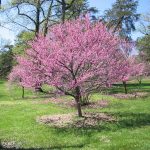
Eastern Redbud
The Eastern Red Bud is unmistakable in Spring with its spectacular pink and rose colored blossoms. Its branches branch outward low on the trunk and ensures no two redbuds look alike. Adaptable to varied soil types and PH, moderate growth rate and stunning Spring blossoms make the Eastern Red Bud a favorite accent piece to landscaped flower gardens. It prefers moist, well-drained soil and should not be planted in areas with standing water.

October Glory Maple
The October Glory Maple is a cultivar of the Red Maple. It is fast growing, keeps its deep green leaf color throughout the summer, and wow’s us in autumn. When one thinks of striking brilliant Orange foliage they’ve seen in autumn, the October Glory Maple is what they recall. In some years a dull burnt orange or red, in other years an almost iridescent neon orange! Birds and small mammals are attracted to their “helicopter” seeds that have fallen, and pollinators are attracted to the tiny red flower blooms that appear in spring. The October Glory can adapt in many different soil types, but prefers moist, acidic soils. Once established, its fall foliage colors are very reliable, turn colors a bit later than other Maple’s, and also keep their fall colors longer than most others.


Royal Purple Smoke
Is it a tree, or a bush? The Royal Purple Smoke is actually a deciduous shrub that is a stunning accent tree / shrub in any landscape. Eventually growing 10-15 feet tall and wide, it sports gorgeous maroon-red / purple leaves that are certain to catch the eye. But that’s not all! The “Smoke” comes from billowy “hair like” puff balls that appear from the tree’s stalks where it’s tiny yellow flowers bloomed. Though the flowers are deemed insignificant, the “smoke balls” are highly attractive. The Purple Smoke can be vigorously cut back in the VERY early spring and this will promote vigorous and larger leaf growth, but at the expense of the blooms. It is a plant where “less is more”. It does well in highly drained “rocky or loose soil”, and does not like wet feet or soils that remain saturated. Once established, it requires only moderate water and is drought tolerant, requires little fertilizer or maintenance (save for how you wish to prune it).
Is it a tree or a shrub: you decide!
Silver Maple
The Silver Maple is a fast growing shade tree that sports the signature Maple Leaf in summer with green topside, and silvery on the bottom. For many years this tree was the go to tree for growing urban street plantings because of its rapid growth, but its shallow root system made that counterproductive. It is the fastest growing maple and thrives in wet river bottom and lowlands, but tolerates drier soils as well. It is an excellent choice as a Rain Garden tree or planted in wetter than normal areas. As with all Maples, they require pruning to keep their shape and will provide shade faster than any of their Maple cousins. This is a Maple for shade and beauty in the summer, not for brilliant fall foliage. It transplants well and is a favorite for robin nesting and its signature “helicopter” seeds (samaras) are devoured by squirrels, birds and other small mammals.
Swamp White Oak
Who doesn’t admire the sight of a sturdy oak tree? The Swamp White Oak is a medium sized, moderately fast-growing Oak that grows to @ 50-60 feet tall and wide. The Swamp White Oak transplants well and is a long-lived tree: up to several hundred years as well as being a bird and pollinator favorite. It sports large, leathery, broad multi-colored leaves that are dark green on top and silvery on the bottom in summer, then turning yellow/brown and sometimes “reddish purple” in fall. Its wide, full canopy makes for an excellent shade tree or a street planting. It prefers full sun and acidic soil PH: yellowing of leaves during the summer months is a telltale sign of soils with high PH. While the Swamp White Oak thrives in lowlands near swamps and marshes in medium to wet conditions and poorly drained soils, it also tolerates clay soil and drought well.
Thornless Honey Locust
The Thornless Honey Locust is a beautiful, rapid growing shade tree that is adaptable to many soil types and displays beautiful yellow fall foliage. It provides soft shade that does not choke out grass or garden plants beneath it. Seemingly impervious to salts and pollutants, the Thornless Honey Locust does equally well in urban areas as it does in the suburbs. Though it prefers moist well drained soil, its aggressive, deep diving root system makes it highly drought resistant and driveway/sidewalk safe.
The Thornless Honey Locust produces pretty green flowers in Spring with the fragrance of honey, and when mature produce legumes (seed pods) that rabbits, squirrels and other wildlife consume.
 Evergreens
 Ornamental Trees
 Flowering Trees