


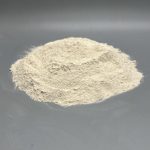
Hunters Pro Blend
Price range: $19.99 through $37.99
Give Your Garden the Nutrition it deserves!
Hunters Pro Blend (5-3-4) All-Purpose Fertilizer-is a versatile all-purpose fertilizer combining plant-based meals, animal-based meals, and essential minerals. An excellent choice for vegetable gardens, flowers, lawns, trees and shrubs.
One convenient blend for your garden, farm and landscape.
Give Your Garden the Nutrition it deserves!
Looking for one dependable fertilizer for your garden, landscape, and growing spaces?
Meet Hunters Pro Blend (5-3-4) All-Purpose Fertilizer-a versatile nutrient blend design to support a wide variety of plants. Formulated with a diverse combination of plant-based meals, animal-based meals, and essential mineral sources, Hunter’s Pro Blend delivers balanced nutrition for gardens, lawns, trees, shrubs, and flower beds.
Whether you are growing vegetables, maintaining established trees, or filling your landscape with beautiful flowers, this all purpose fertilizer is a convenient addition to your growing routine.
WHY CHOOSE HUNTER’S PRO BLEND?
- Balanced 5-3-4 formula: Provides nitrogen, available phosphate, and soluble potash.
- Versatile Application: suitable for vegetables, flowers, lawns, trees ans shrubs.
- Diverse Nutrient Sources: Combines plant meals, animal protein meals and mineral ingredients.
- One Convenient Blend: A practical all-purpose fertilizer for the home garden, farm, and landscape.
Guaranteed Minimum Analysis:
Total Nitrogen…5%
- 1.5% Water Soluble Nitrogen
- 3.5% Water Insoluble Nitrogen
Available Phosphate…3%
Soluble Potash…4%
INGREDIENTS:
*Vegetable Protein meals (alfalfa meal, cocoa meal, cotton seed meal, kelp meal, peanut meal, and soybean meal), Animal protein meals (blood meal, crab meal, dry whey, feather meal, and fish meal), Porcine bone meal, Pasteurized Poultry litter, (natural) Sulfate of Potash, Greensand, Phosphate Rock, and (natural) Nitrate of soda
Uses: Lawns, Flowers, Vegetables, Evergreens, Shrubs and Medical Cannabis
Application: Apply 2-3 pounds per 100 sq. ft.
| Weight | N/A |
|---|---|
| Dimensions | N/A |
| Bag Size | 3lbs Bag, 6lb Bag |

Related products

Azomite
Azomite is mined from a single mine located in central Utah and is approximately 30-million-year-old volcanic seawater ash, hydrated sodium aluminosilicate. It contains up to 70 trace elements and minerals and it provides some micronutrients such as Ca and Mg.
0-0-0.2
Soluble Potash…0.2%
Calcium…1.8%
- 100% natural
- odorless
- no additives or fillers
- will not inhibit aeration or water flow
- does not affect pH
- will not burn plants
Application: Trees (the pH needs to be 6.5 or lower) add 1-5lbs per tree depending on the size of tree. House plants- 1tsp. per 1" diameter pot. Vegetable or flower bed- (new) 1lb per 10square ft, (established) sprinkle around each plant.

Blood Meal
Blood meal is a finely ground protein product that is derived from porcine blood. It is considered high in nitrogen, compared to all the organic meals.
13-0-0
TOTAL NITROGEN (N)...13.0%
*Water Insoluble Nitrogen...13%
- Can lower ph
- High concentration of non-synthetic nitrogen
- Can last up to 8 weeks but some environmental factors can affect its release (3 weeks after application, a soil test is recommended)
- Commonly used to repel/deter animals (ex. deer)
- CAUTION- can make animals sick if ingested
- Brakes down rapidly by soil organisms into an available nutrient
- Quickly available organic nitrogen
- Best application is when it is lightly incorporated into the surface of the soil.
Application: New gardens, 1-2lbs per 100 square feet (depending on the crop) in the first few inches on the soil. Transplants, add aprox. 1tsp into the new hole for plant (water in the new transplant). To top dress, add 1-2tsp (depending on size of plant) every 4 weeks during the active growing season.

Bone Char
Bone Char is a rich soil amendment which comes from ground incinerated animal bones. Bone char is a type of BioChar, but contains higher levels of phosphorus than BioChar, which is derived from charred wood. Bone char is a natural filter and is used as such in many industries and in agriculture has been shown to immobilize Cadmium that exists in the soil (a non-essential trace element that in high concentrations is harmful to humans). Because of its highly porous surface, Bone Char effectively holds moisture and nutrients in the soil which would otherwise wash away, requiring less supplemental nutrients to be added over time. This holding of nutrients and moisture allow plans to reach their full potential while greatly improving overall soil health. It is considered a clean and renewable phosphorus rich soil amendment.
0-16-0
Available Phosphorus...16%
Calcium...33%
- reduces toxicity in a plant
- enhances plant health
- increases blooms
- slow release
- high in phosphorus
- immobilizes Cadmium
- renewable source of Phosphorous
- holds moisture and nutrients within the soil
Application: Use Bone Char where soil sample indicates lower Phosphorus levels.
Bone char can be added as an "activated" amendment or "as is". If applied "as is", it will provide benefits albeit in a rather slow fashion. Activated Bone Char is Bone char that has been mixed in a 50/50 ratio with organic compost, moistened and turned daily for 10 days, or drenched with a compost "tea" and allowed to sit for 10 days, keeping it moist. The "Activation" process speeds up the decay of the organic material and allows the healthy microbes to flourish, and find refuge within the highly porous surface of the Char. This holding attribute of the Char also applies to soil moisture.
Planting new Trees or shrubs; add up to 1 lb of activated Bone Char at the root layer before backfilling.
New Container Plants - add up to 20% of your potting media with activated Bone Char.
New Gardens - equal parts compost and Bone Char, with an equal measure of potting media, incorporated thoroughly.


Feather Meal
Feather meal is a biproduct of processing poultry feathers. It is produced by sterilizing feathers and then grinding them into a powder. Its primary benefit is that it is a slow-release nitrogen.
- Guaranteed analysis: 13-0-0
- Has no effect on pH
- Starts to become active within 4-7 days of application
- Can last up to 3 months in soil
- Increases green leaf growth
- It is high in nitrogen, but its bioavailability can be low
- Chicken feathers are the primary source
- not water soluble
- top dressing is not ideal
*Pellets are easy to incorporate in soil and break down fairly quickly. Using feather meal in pellet form helps minimize waste.


 Evergreens
 Ornamental Trees
 Flowering Trees